


Honors College Courses
Honors College Courses Fall Semester
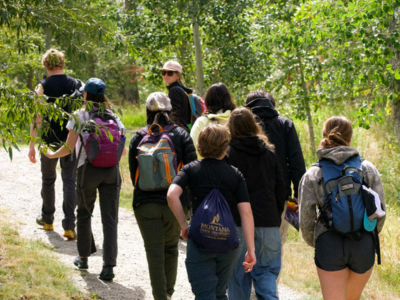
This excursion affords incoming freshmen the opportunity to informally interact with Honors faculty and students in a beautiful outdoor setting. The weekend trip includes the discussion of a pre-selected text, a spectacular day hike, lodging, delicious meals, and a wonderful campground in Hyalite Canyon. All registration forms must be received to secure your spot in Hike and Read.
The Fall 2027 Hike and Read application will open in July 2027.
From sculpture to music, ranching to sustainability, the Tippet Rise Art Center serves as a portal for the students to explore a wide range of subjects. Students join the Honors College Dean and staff for an extraordinary weekend of sculpture, music, and landscape. We attend three world-class concerts, travel through the 10,000-acre working ranch to discuss art, and enjoy a meal with Tippet Rise founders Peter and Cathy Halstead.
Send a letter of interest to honors@montana.edu >>
This symposium provides an in-person, interactive forum to introduce and equip highly motivated students to pursue undergraduate research at MSU. The research talks will be in a short TED-style format, emphasizing the people and ideas that are pushing our limits of knowledge across campus and beyond! Students who complete the seminar and workshop activities will be eligible to apply for exclusive research funding opportunities, summer research positions, and additional academic credit.
Access the Fall 2026 Application for MSU students >>
This course substitutes for a University Seminar (US) core course and emphasizes the critical reading and analysis of fundamental texts in the humanities, arts, communication, social studies, science, and history of ideas. The small seminar uses a socratic teaching methodology, and places particular emphasis on developing the student's academic writing and oral presentation skills.
*NOTE: This course, along with other US Core courses, may not be repeated.
This course sits at the confluence of the body’s somatic experience (as framed through the lens of climbing movement) and socio-political analysis, exploring how 21st century stressors like social media, hyper-partisan politics, global warming, Corona virus, and socio/economic inequity are experienced bodily and in turn how this effects our thinking. The central purpose of the course is to help students develop a conceptual and hands-on framework that supports both physical and mental wellness. Part philosophy, part physical practice, this course uses somatic modes of attention, putting into practice lessons in readings on Zen, Yoga, mindfulness, dance, environment, and meditation. In addition, we will use climbing as a metaphor to explore “the wilderness within”—examining topics such as the psychology of risk, fear and stress, failure and success, ethics, and the body’s lived experience of politics, trauma, and social challenges. This course is open to all students; no previous climbing experience is needed.
Physical Ability
This class is open to students of all abilities. As such, I believe it is possible to meet the course goals regardless of physical ability. At the root of the class is an exploration of the mind/body connection and the roll our world has in shaping that connection. While climbing movement is nominally the medium through which we ground our conversation, any movement (even stillness) can provide a basis for understanding our bodies and minds. I will work with you individually to tailor physical and mental goals that are comfortable yet challenging. The daily physical “practice” can be tailored to meet your individual needs. As long as you are present and intentional in applying the lessons in class, I believe there is much to be learned about our body and mind, regardless of physical ability.
This course gives students the opportunity to mentor gifted students from Bozeman Public Schools. Students meet together in seminar to discuss, plan, implement, and evaluate their projects.
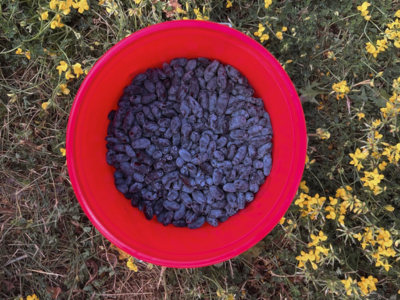
This course will introduce students to the unique Bacteria, Archaea, and Eukarya inhabiting Yellowstone National Park’s geothermal hot springs. You will learn how microorganisms influence hot springs, contribute to the cycling of nutrients, and how these unique organisms are used in a variety of biotechnology applications. You will also visit these unique ecosystems and develop strategies needed to grow unique extremophilic organisms through field sampling and collection, laboratory work, and analysis. Finally, you will analyze your microbial enrichments via molecular techniques and DNA sequencing to determine what thermophiles you successfully cultured.
Enrollment for this course is limited to 12 students, first preference will be given to honors microbiology and bioengineering students, with honors STEM field students second, then opened to other students until filled. Students will be encouraged to hike (with faculty accompaniment) seven miles one-way to the field sampling location, and camp for two nights at a backcountry campsite. Students that cannot do this for any reason can still participate in the lab/lecture portion of the course. Grades will not be penalized for not participating in the sampling events.
Directed research and study on an individual basis. Consent of instructor and approval of Honors Dean required.
Learn more about independent studies >>
Designed for transfer and non-traditional students entering the Honors College later in their academic careers, this course substitutes for a University Seminar (US) core course and emphasizes the critical reading and analysis of fundamental texts in the humanities, arts, communication, social studies, sciences, and history of ideas. The small seminar uses a socratic teaching methodology, and places particular emphasis on developing the student's academic writing and oral presentation skills.
*NOTE: This course, along with other US Core courses, may not be repeated.
This course will investigate the transformative power of music, through an exploration of the musical legacy of the Ancient Greeks, the role of music in cognitive development and its application in healthcare, the value of music education, and a discussion of significant works of music as manifested in social movements, and in cultural and religious contexts.
"Within the structure of a Socratic seminar, students will actively participate in the discourse. Students will also engage in the creation of a musical composition in small groups.
The course will culminate in multi- and inter-disciplinary research projects, which will be presented in a public forum at the end of the term in Inspiration Hall.
*NOTE: No prior coursework or musical experience are required for this course.
400 level Honors College seminars are interdisciplinary courses that emphasize class discussion, analytic thinking and writing skills, and independent creativity or research. Many of these seminars will satisfy a Core 2.0 requirement.
See current upper division Honors seminars >>
Student Fellow positions include extensive interdisciplinary reading, analytic writing, and oral argument, leading to comprehensive examinations. Texts & Critics Faculty meetings are Mondays noon-1p.
Learn more about becoming a Student Fellow >>
This course involves directed undergraduate research or creative projects that may culminate in a research paper, journal article, or undergraduate thesis. The course will address responsible conduct of research. Consent of instructor and approval of Honors Dean required.
To receive thesis credit in your Major, students are required to fill out the Departmental Thesis Notification form and return it to the Honors College for approval.
Learn about the Honors Thesis >>
Directed research and study on an individual basis. Consent of instructor and approval of Honors Dean required.
Learn more about independent studies >>
Departmental Honors College Courses Fall Semester
This course is a study of the creative design process with emphasis on two-dimensional design, basic three dimensional design, and essential tools for graphic communication. Students will develop self-critical skills.
*Prerequisites: Honors student with a landscape design major, enrolled in a pre-environmental design program, or with Consent of Director.
This course covers the thorax, abdomen, pelvis and perineal anatomy, emphasizing topography and three dimensional relations. Instruction will be based on student dissections of human cadavers, with lectures covering structure and function, as well as types of pathology typically encountered in the dissection laboratory. This class is hosted in the Department of Microbiology and Cell Biology and is co-convened with BIOH 509.
*Prerequisites: Junior by credit hours and BIOH 185 or BIOH 211.
This course parallels CHMY 141, with emphasis on critical and analytical thought and with a greater reliance on math skills.
*Prerequisites: High school chemistry, physics, algebra, and a 500 level math placement.
This is the first of a two-semester Honors sequence in organic chemistry. The topics covered parallels CHMY 321 at an accelerated pace with in-depth coverage of physical organic chemistry, stereochemistry, synthetic organic chemistry, spectroscopy, and nomenclature.
*Prerequisites: CHMY 151 and CHMY 153 or consent of instructor.
Introduction to programming: program design, analysis, and implementation in Java, including I/O, assignment, decision, iteration, scalar types, arrays, control structures, methods, classes, and common data types. No previous programming experience required.
*Corequisite M 151.
Covers economic principles are introduced and applied to a wide range of contemporary and historical problems including legal, environmental, resource, health, taxation, poverty, economic development, and macroeconomic policy issues.
Lecture/laboratory introduction to electrical fundamentals including Kirchhoff's and Ohm's Laws, using meters and oscilloscopes, time-varying signals in electric circuits, inductors and capacitors, series and parallel circuits, introduction to digital circuits, problem solving including computer applications, technical communications, team work.
*Prerequisite: M 151 or equivalent.
Honors section of EGEN 201 parallels the non-honors sections. This course introduces students to the equilibrium of particles and rigid bodies; static analysis of structures including trusses, beams, frames and machines; coulomb friction; area and mass centroids, moments and products of inertia.
*Prerequisite: PHSX 220 or PHSX 240.
*Corequisite: M 273 or M 283.
Parallels M 171 but with a greater emphasis on theory and more difficult problems.
*Prerequisites include: M 151 with an "A" grade, 700 on the SAT Math exam, 31 on the ACT Math exam, 4 on an AP Calculus exam, or consent of the instructor.
Parallels M 273 but with a greater emphasis on theory and more difficult problem solving.
*Prerequisites include: M 182 with a 'B' grade, M 172 with an 'A' grade, AP Calculus BC exam with a 5, or consent of the instructor.
Parallels PHSX 220. The concepts are discussed in more depth and the range of applications is greater.
*Corequisite: M 171 or M 181.
Parallels PSYX 100. This course introduces students to the scientific method and its use to understand behavior, emotion, and cognition, and build theories and knowledge within key areas of psychological inquiry. A lab component offers hands-on experiences to demonstrate psychological ideas and principles.
Honors College Courses Spring Semester
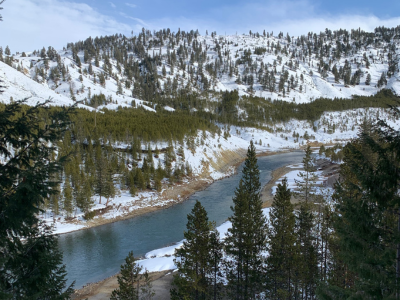
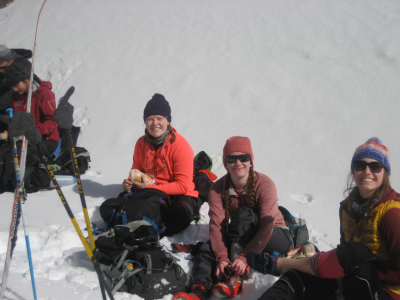
This excursion affords incoming freshmen the opportunity to informally interact with Honors faculty and students in a beautiful outdoor setting. Includes discussion of a pre-selected text, transportation, a spectacular day cross country skiing in Yellowstone National Park, lodging in Gardiner, Montana and delicious meals. Preference given to freshmen students.
The Spring 2027 Ski and Read application is open >>
This course substitutes for an Inquiry Humanities (IH) core course and emphasizes critical reading/analysis of fundamental texts in the humanities, arts, communication, social studies, science, and history of ideas. Socratic teaching methodology. Particular emphasis will be on development of analysis and criticism through academic writing and oral argumentation presentations.
*NOTE: This course, along with other IH Core courses, may not be repeated.
This course sits at the confluence of the body’s somatic experience (as framed through the lens of climbing movement) and socio-political analysis, exploring how 21st century stressors like social media, hyper-partisan politics, global warming, Corona virus, and socio/economic inequity are experienced bodily and in turn how this effects our thinking. The central purpose of the course is to help students develop a conceptual and hands-on framework that supports both physical and mental wellness. Part philosophy, part physical practice, this course uses somatic modes of attention, putting into practice lessons in readings on Zen, Yoga, mindfulness, dance, environment, and meditation. In addition, we will use climbing as a metaphor to explore “the wilderness within”—examining topics such as the psychology of risk, fear and stress, failure and success, ethics, and the body’s lived experience of politics, trauma, and social challenges. This course is open to all students; no previous climbing experience is needed.
Physical Ability
This class is open to students of all abilities. As such, I believe it is possible to meet the course goals regardless of physical ability. At the root of the class is an exploration of the mind/body connection and the roll our world has in shaping that connection. While climbing movement is nominally the medium through which we ground our conversation, any movement (even stillness) can provide a basis for understanding our bodies and minds. I will work with you individually to tailor physical and mental goals that are comfortable yet challenging. The daily physical “practice” can be tailored to meet your individual needs. As long as you are present and intentional in applying the lessons in class, I believe there is much to be learned about our body and mind, regardless of physical ability.
The three-credit class convenes once a week throughout the semester, examining the history, social and cultural milieu of an international destination that students and faculty will visit during a two-week excursion at the conclusion of the semester.
*Previous expeditions have included Nepal, France, Greece, Italy, Turkey, England, Ireland, South Africa, Russia, France, and Germany.
This course gives students the opportunity to mentor gifted students from Bozeman Public Schools. Students meet together in seminar to discuss, plan, implement, and evaluate their projects.
Directed research and study on an individual basis. Consent of instructor and approval of Honors Dean required.
Learn more about independent studies >>
This course will investigate the transformative power of music, through an exploration of the musical legacy of the Ancient Greeks, the role of music in cognitive development and its application in healthcare, the value of music education, and a discussion of significant works of music as manifested in social movements, and in cultural and religious contexts.
"Within the structure of a Socratic seminar, students will actively participate in the discourse. Students will also engage in the creation of a musical composition in small groups.
The course will culminate in multi- and inter-disciplinary research projects, which will be presented in a public forum at the end of the term in Inspiration Hall.
*NOTE: No prior coursework or musical experience are required for this course.
400 level Honors College seminars are interdisciplinary courses that emphasize class discussion, analytic thinking and writing skills, and independent creativity or research. Many of these seminars will satisfy a Core 2.0 requirement.
See current upper division Honors seminars >>
Student Fellow positions include extensive interdisciplinary reading, analytic writing, and oral argument, leading to comprehensive examinations. Texts & Critics Faculty meetings are Mondays noon-1p.
Learn more about becoming a Student Fellow >>
This course involves directed undergraduate research or creative projects that may culminate in a research paper, journal article, or undergraduate thesis. The course will address responsible conduct of research. Consent of instructor and approval of Honors Dean required.
To receive thesis credit in your Major, students are required to fill out the Departmental Thesis Notification form and return it to the Honors College for approval.
Learn about the Honors Thesis >>
Directed research and study on an individual basis. Consent of instructor and approval of Honors Dean required.
Learn more about independent studies >>
Departmental Honors College Courses Spring Semester
A continuation of the study of the design process introduction to architectonic principles and architectural graphic skills and further understanding of the creative process. Continued development of student's ability to make critical and analytical judgments.
*Prerequisites: Honors student with a landscape design major, enrolled in a pre-environmental design program, or with Consent of Director.
This course covers the back, extremities and joint anatomy, emphasizing topography and three dimensional relations. Instruction will be based on student dissections of human cadavers, with lectures covering structure and function, as well as pathology typically encountered in the dissection laboratory.
*Prerequisites: Senior by credit hours and BIOH 185 or BIOH 211.
Covers neurophysiology of sensory cells and systems. Topics range from the mechanisms underlying sensory reception to the processing of sensory information at higher stages. The major focus will be on human sensory systems. Pathologies that effect sensory perception will be considered. The course will also be offered for Honors credit to qualified students wishing to do an additional project requiring more in-depth group research. Honors enrollees will receive an extra course credit for this extra work.
*Prerequisite: BIOH 313.
Parallels CHMY 143, with emphasis on critical and analytical thought and with a greater reliance on math skills.
*Prerequisites include: A grade better than a C in CHMY 141 or CHMY 151.
This is the second semester of the two-semester honors sequence in organic chemistry. Topic coverage parallels CHMY 323, with more in-depth coverage of mechanisms and more emphasis on retrosynthetic analysis and on solving multistep synthesis problems.
*Prerequisites include: A grade of better than a C in CHMY 331.
Covers economic principles are introduced and applied to a wide range of contemporary and historical problems including legal, environmental, resource, health, taxation, poverty, economic development, and macroeconomic policy issues.
Parallels M 172 but with a greater emphasis on theory and more difficult problems.
*Prerequisites include: M 171 with an "A" grade or M 181 with a "B" grade.
Parallels M 274 but with a greater emphasis on theory and more difficult problem solving.
*Prerequisites include: M 283 with a "B" grade, M 273 with an "A" grade, or consent of the instructor.
Parallels PHSX 222. The concepts are discussed in more depth and the range of applications is greater.
*Prerequisites include: PHSX 220 or PHSX 224; M 171 or M 181. Co-requisite: M 172 or M 182.
This class is an in-depth study of the sociological enterprise: the broad range of theories and research used by sociologists to think about and examine the social world. All major areas of sociology are covered with an emphasis on institutions and systems of stratification.